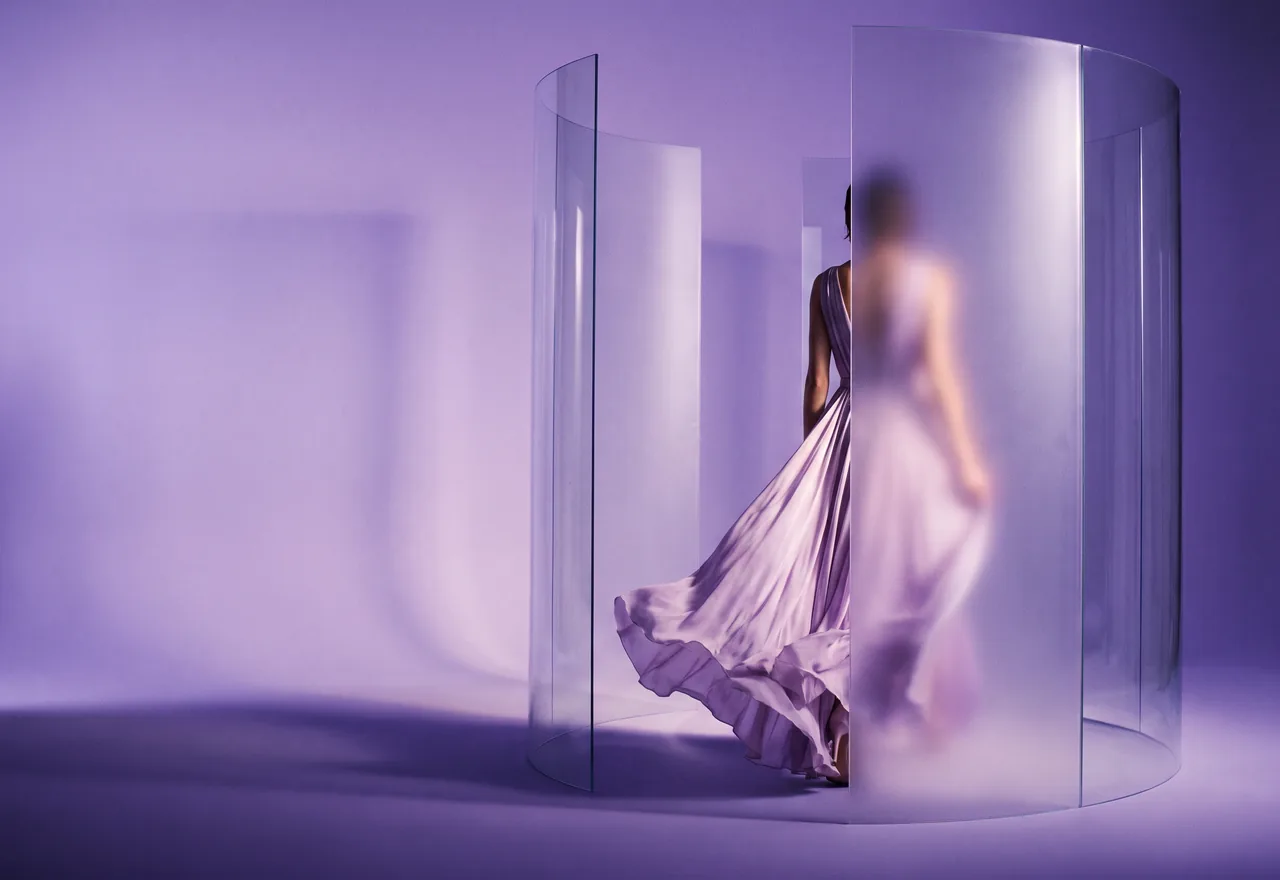
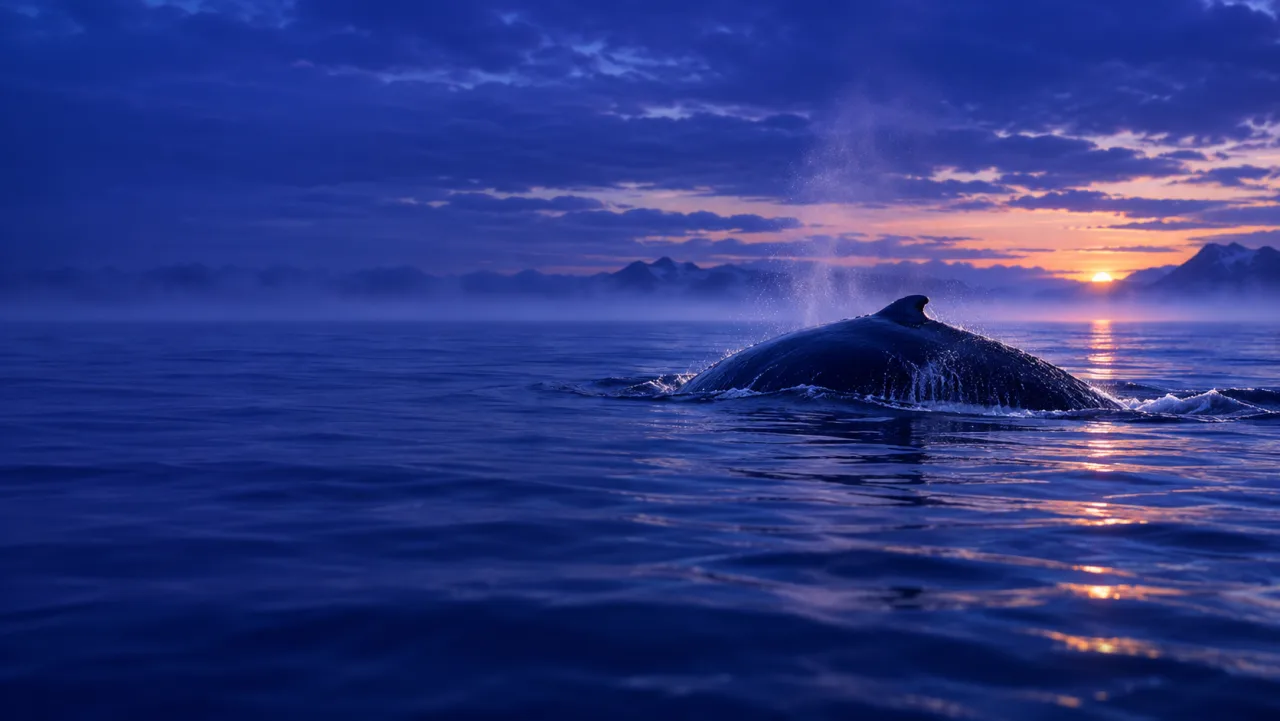
The MiniMax H3 Image API runs MiniMax's open-weight image model: 4K output of about 16 megapixels, text in posters and labels written as asked, and edits from up to 16 reference images. Call minimax-h3-image on APIKO with the same key as every other model.
Pricing
One image
38% off
$0.0135$0.022/ image
Variant
Input
0 / 20000
Aspect ratio
Resolution
Estimated cost$0.04125 / image40% offVendor list price ≈ $0.069
$1 buys≈ 24 images
Output
Run to see the result here
Result links are signed and kept for 24 hours — download anything you want to keep. Failed tasks are refunded in full.
Know the cost before you top up
What a MiniMax H3 Image API image costs
You pay for each image you get; failed calls are not charged. Balances and charges are in USD; Alipay payments convert to CNY at the rate when you order.
Your first test
One image
$0.0135$0.022/ image
The price of the image is held when you submit and charged when it is ready; failed tasks are refunded in full.
The MiniMax H3 Image API on APIKO bills per image delivered: 1K and 2K share one price, 4K costs more, and each reference image adds its own charge.
About MiniMax H3 Image
MiniMax H3 image generation, at 4K
MiniMax H3 Image is the image model MiniMax released with open weights on November 10, 2026, and the MiniMax H3 Image API on APIKO serves it under the model ID minimax-h3-image. It draws from a prompt or edits and combines up to 16 reference images, at 1K, 2K or 4K in ten aspect ratios; a 4K image is about 16 megapixels (4096×4096 at 1:1, 5472×3072 at 16:9). It is the image model of the H3 family, not the H3 video model.
What MiniMax H3 Image can do
Every picture here is our own result through APIKO, with the prompt shown; we only resized and compressed them. Fields and limits are in the parameter cards below.
4K travel poster · 3:4 (prompt below)1K text to image · 1:12K infographic · 9:16 (prompt below)
Our test · minimax-h3-image
Posters, labels and infographics with the words you asked for
Titles, labels and step names come out as written: "LISBON" and "Ride the hills" on the 4K poster, "MORNING" on the cup, the four steps of the infographic. The caption under each step and the closing line were the model's own additions; we did not ask for them.
Put every line of text in quotes and say where it goes; to stop extra text, add "no other text".
Prompt (as sent)
A vintage travel poster for a coastal town. Large title at the top: "LISBON". Below it, yellow tram 28 climbing a steep cobblestone street, terracotta rooftops and the river in the distance, warm late-afternoon light, flat screen-print style with a limited palette of ochre, teal and cream. Small line at the bottom: "Ride the hills".
Send up to 16 reference images and say what to keep. Here the serum bottle moved from a studio plinth to a bathroom shelf in a 16:9 banner, and both label lines stayed word for word; the dropper bulb came back clear instead of gold, so check the details you care about.
Name what must not change (the label text, the logo, the colour) and what the new scene is.
Prompt (as sent)
Place this exact serum bottle on a sunlit marble bathroom shelf beside a folded white towel and a small glass of fresh rosemary, morning light from a window on the left. Keep the bottle, the gold dropper and the label text "HERBA" and "Rosemary Hair Serum 30 ml" unchanged. Wide 16:9 product banner with empty space on the right for copy.
A 4K square is 4096×4096 and a 4K 16:9 frame 5472×3072, so wrinkles, knit and mist keep their detail when you crop or print. In our tests a 4K image took 27 to 34 seconds.
Describe the lens, light and film look; ask for 4K only when the picture will be shown large.
Prompt (as sent)
Editorial portrait of an elderly fisherman mending a net on a wooden dock at golden hour, deep wrinkles, knitted wool cap, shallow depth of field, natural film color, photorealistic.
Where MiniMax H3 Image fits
Posters and social graphics
Campaign visuals with a headline and a tagline, in portrait or story formats.
"exact text"3:4 / 9:16
Product shots and banners
Put one product into new scenes and banner sizes from a reference photo.
edits1–16 refs
Infographics and how-to cards
Numbered steps, labels and simple icons for docs, menus and social posts.
labelssteps
Print and large displays
4K output of about 16 megapixels for print, retail screens and crops.
4K~16 MP
MiniMax H3 Image specs
Every field of the minimax-h3-image request body. Defaults are the API's.
modelstring
Model ID, always minimax-h3-image.
Default: required
promptstring
What to draw; put any text that must appear in quotes.
Default: required
resolutionenum
Output tier: 1K (about 1 MP), 2K (about 4 MP) or 4K (about 16 MP). 1K and 2K cost the same.
Default: 4K
sizeenum
Aspect ratio: 1:1, 2:3, 3:2, 3:4, 4:3, 4:5, 5:4, 9:16, 16:9 or 21:9 (aspect_ratio is the same field). Exact pixel sizes are not accepted.
Default: 1:1
imagesarray
Reference image HTTPS URLs, 1 to 16; each distinct image is billed. Required on /v1/images/edits, also accepted on generations.
Default: omit
ninteger
One image per request.
Default: 1
asyncboolean
Without it the call waits for the image, up to 85 seconds; past that it returns 504 task_timeout with the task id. Edits often take longer, so send true and poll GET /v1/tasks/<id>.
Default: false
response_formatenum
url (a signed link kept for 24 hours) or b64_json.
Default: url
callback_urlstring
An HTTPS URL notified when the task finishes; without it, poll the task.
Default: omit
How to use minimax-h3-image
Write your idea, add reference images if you need them, and create in three steps.
01
Describe the subject and scene
Start with the subject, setting and goal, then add materials, light, camera and any text that must appear.
02
Choose the output
Generate from text, or add reference image URLs to edit or combine them; the MiniMax H3 Image API takes up to 16.
03
Verify, then call the API
Confirm the result here, then create an async task with the same prompt and model ID.
TASK_ID=$(curl https://api.apiko.app/v1/images/generations \
  -H "Authorization: Bearer $APIKO_API_KEY" \
  -H "Content-Type: application/json" \
  -d '{
  "model": "minimax-h3-image",
  "prompt": "A vintage travel poster for a coastal town. Large title at the top: \"LISBON\". Below it, yellow tram 28 climbing a steep cobblestone street, terracotta rooftops and the river in the distance, warm late-afternoon light, flat screen-print style with a limited palette of ochre, teal and cream. Small line at the bottom: \"Ride the hills\".",
  "size": "1:1",
  "resolution": "4K",
  "async": true
}' | python3 -c 'import json,sys; print(json.load(sys.stdin)["id"])')

while :; do
  TASK=$(curl -s https://api.apiko.app/v1/tasks/$TASK_ID \
    -H "Authorization: Bearer $APIKO_API_KEY")
  printf '%s\n' "$TASK"
  printf '%s' "$TASK" | grep -qE '"status": *"(completed|failed)"|"error": *\{' && break
  sleep 5
done
Option 2 · Call it from Claude Code or Codex
For: quick clips, prompt tests, letting an agent write the integration
1
Install the APIKO MCP
Keep the key in an environment variable, never in the chat.
2
Tell the agent what you want
The picture, any references and a budget limit.
3
The agent quotes, submits and follows up
estimate_cost gives the price, then generate_image submits and hands you the image link.
# Claude Code
claude mcp add apiko --scope user -e APIKO_API_KEY=sk-... -- npx -y apiko-mcp
Use APIKO's minimax-h3-image to generate one image. Prompt: <describe the picture here>. Get a quote with estimate_cost first and ask me if it is over $1; once I confirm, generate it at 2K and give me the image link.
How much does the MiniMax H3 Image API cost per image?
On APIKO the MiniMax H3 Image API costs $0.0135 per image at 1K or 2K and $0.04125 at 4K, and each reference image adds $0.00375. You pay only for images delivered; failed calls are refunded.
Can MiniMax H3 generate images, and how is H3 Image different from the H3 video model?
Yes. MiniMax H3 Image (minimax-h3-image) makes still images from text or reference images. The H3 video model (minimax-h3) makes video clips with sound; it has its own page and its own price.
What is the model ID, and is the API OpenAI-compatible?
The model ID is minimax-h3-image. Call POST /v1/images/generations to generate and POST /v1/images/edits with images to edit, using the same key as every other model on APIKO; the request and response follow the OpenAI image format.
Is MiniMax H3 Image free and open source? Where are the weights?
MiniMax published the weights on Hugging Face (MiniMaxAI/MiniMax-H3-Image) under its own community license, not Apache or MIT, and the license limits where it may be used, so read it before self-hosting. The hosted MiniMax H3 Image API is paid per image; new APIKO accounts get a $0.20 trial.
Should I run the weights locally (ComfyUI) or use the hosted API?
Running it yourself means downloading a large checkpoint and keeping a big GPU busy, with ComfyUI or diffusers. The hosted API needs only a key: no hardware, and you pay per image.
How do I edit an image or combine multiple reference images?
Send 1 to 16 public HTTPS image URLs in images on POST /v1/images/edits (generations takes them too) and describe the result, naming what must stay the same. The MiniMax H3 Image API bills each distinct reference image once.
What resolutions and aspect ratios are supported?
resolution is 1K, 2K or 4K (default 4K) and size or aspect_ratio one of 1:1, 2:3, 3:2, 3:4, 4:3, 4:5, 5:4, 9:16, 16:9 and 21:9 (default 1:1). In our tests 1K was 1024×1024, 2K 16:9 2720×1536, 4K 1:1 4096×4096 and 4K 16:9 5472×3072.
How long does a 4K image take to generate?
In our tests a 4K image took 27 to 34 seconds, 2K about 21 to 32 seconds and 1K about 15. For long jobs send async: true and poll GET /v1/tasks/{id}.
Does it render text accurately in posters and infographics?
In our tests the MiniMax H3 Image API wrote every quoted title, label and step name correctly, but it sometimes adds short lines of its own. Quote the exact text, say where it goes, and proofread before you publish.
Can I get more than one image per request?
No, n is always 1. Send one request per image; requests can run in parallel.
Do I need a MiniMax account, or can I use an APIKO API key?
An APIKO API key is enough: the MiniMax H3 Image API on APIKO is billed from your APIKO balance, with no MiniMax account or separate contract.
How is MiniMax H3 Image billed?
Once per successful call at the published per-call rate or selected tier. See the failed-request question below for the refund rule.
Is it OpenAI-compatible?
Yes. Use the gateway base URL and your API key with the model-specific image/video endpoint and the additional fields shown above.
How do I get an API key?
Sign up, then create an API key in your console. One API key can call every model on the gateway.
Is there a free trial for the MiniMax H3 Image API?
Yes. Sign in with Google using a Gmail address and $0.20 of trial credit is added to your balance, no card needed, once per person. It works on minimax-h3-image and every other model.
How do I receive the generated file?
Images are asynchronous: submit the request, poll GET /v1/tasks/<id>, then read data[0].url. Videos are asynchronous: poll GET /v1/videos/<id>, then download video_url. APIKO-signed links are kept for 24 hours.
What if a request fails?
You are not billed for failed or errored calls. Retry, and if it keeps failing, contact us via the live chat at the bottom right of the page.
 Gemini 4 Neon